Creating an inviting outdoor space is one of the best ways for businesses to increase foot traffic, enhance customer satisfaction, and add value to their property. Whether it’s a restaurant, café, hotel, resort, or community center, the choice of furniture plays a critical role. Among the many materials available, commercial aluminum outdoor furniture has become one of the most reliable and versatile options.
Known for its durability, rust resistance, and lightweight design, aluminum strikes a balance between practicality and style. It allows businesses to offer customers comfort and aesthetics while minimizing maintenance costs. With the evolution of modern manufacturing techniques, aluminum furniture is no longer limited to basic frames—it can now be sleek, stylish, and highly customizable.
Why Aluminum is a Preferred Material for Outdoor Commercial Spaces
Aluminum is naturally resistant to corrosion due to its protective oxide layer. Unlike steel or wrought iron, it doesn’t rust, making it ideal for humid, coastal, or rainy environments. For commercial businesses, this means fewer replacements and less ongoing upkeep.
Another key advantage is its lightweight nature, which makes it easy for staff to move, stack, or rearrange seating. Restaurants and hotels, where layouts often change, find this particularly useful. Despite being light, commercial-grade aluminum furniture is reinforced with thicker frames and precision welding to withstand daily use in high-traffic areas.
Aesthetically, aluminum offers design flexibility. Powder coating and anodizing techniques allow manufacturers to produce a wide range of finishes and colors. Whether a business wants a modern industrial look, a classic appeal, or a vibrant pop of color, aluminum can be adapted to fit the brand’s style.
Advancements in Technology for Aluminum Outdoor Furniture
Technology has significantly improved the performance and appearance of aluminum furniture. Modern powder-coating technology provides a durable, chip-resistant finish that protects against UV rays, scratches, and fading. This ensures the furniture retains its polished look even after years of outdoor exposure.
Another advancement is in precision welding and engineering techniques. These processes eliminate weak points in frames, resulting in stronger, more resilient furniture that can withstand constant use in commercial environments.
Additionally, cushion technology has evolved to complement aluminum frames. Many pieces now use solution-dyed acrylic fabrics and quick-dry foams that resist mold, mildew, and fading. Combined with the durability of aluminum, these fabrics help create outdoor furniture that is both stylish and functional.
Real-World Examples of Commercial Aluminum Outdoor Furniture
Example 1: Aluminum Dining Chairs for Restaurants
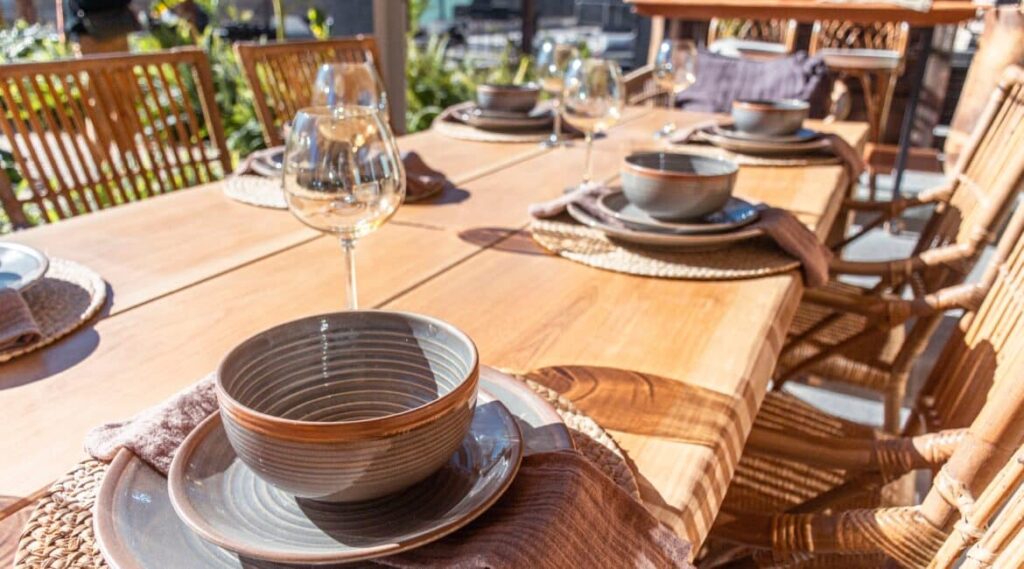
Restaurants with outdoor seating often rely on aluminum dining chairs. They are stackable, lightweight, and easy to rearrange depending on the number of customers. For busy staff, the ability to move chairs quickly is invaluable.
Durability also plays a key role. With frequent use and exposure to weather, restaurant furniture must last. Aluminum resists rust and maintains its integrity far better than wood or steel alternatives. Its versatility in design allows restaurants to match aluminum chairs with various table surfaces such as wood, stone, or glass, ensuring a cohesive and inviting patio layout.
Example 2: Resort Poolside Loungers
Resorts need furniture that can withstand water exposure and constant sunlight. Aluminum loungers are a natural fit because they are corrosion-resistant and easy to maintain. Staff can easily reposition loungers for optimal sun or shade placement, enhancing guest satisfaction.
When paired with plush, weather-resistant cushions, aluminum loungers deliver comfort and luxury. They are lightweight enough for staff to handle but strong enough to endure heavy usage throughout peak tourist seasons. Unlike wood, which may warp, or steel, which rusts, aluminum remains reliable year after year, making it a practical investment for hospitality businesses.
Example 3: Café Bistro Sets for Sidewalk Seating
Small cafés benefit greatly from aluminum bistro sets. Compact and lightweight, these tables and chairs make it easy to set up a welcoming outdoor area, even in limited spaces.
The stackable design of aluminum bistro chairs also helps with storage. Cafés that need to clear sidewalks at the end of the day appreciate how quickly aluminum furniture can be gathered and stored. Powder-coated finishes can add vibrant colors that attract passersby, or they can be finished in neutral tones for a sophisticated look.
Example 4: Aluminum Park Benches in Public Areas
Public parks and plazas require furniture that is tough, weather-resistant, and low-maintenance. Aluminum benches meet these needs exceptionally well. Their rust resistance ensures they stay functional and attractive despite constant exposure to rain, sun, and changing weather conditions.
Additionally, aluminum benches can be designed to fit the surrounding environment—sleek and modern for urban plazas, or more natural-looking finishes for park settings. Because they require little maintenance, municipalities save significantly on long-term upkeep and replacement costs.
Example 5: Rooftop Lounge Furniture for Hotels and Bars
Hotels and rooftop bars often use modular aluminum lounge sets because they provide flexibility for different events. These furniture pieces can be rearranged to accommodate anything from casual gatherings to formal parties.
The lightweight nature of aluminum is especially useful on rooftops, where transporting heavy materials is impractical. Combined with durable outdoor cushions, aluminum lounge furniture delivers comfort, style, and resilience. For businesses that rely on memorable guest experiences, this versatility is an invaluable asset.
Benefits of Choosing Commercial Aluminum Outdoor Furniture
One of the greatest benefits of aluminum furniture is ease of handling. Staff can move, stack, and rearrange it without difficulty, which saves time and labor costs.
Another benefit is its weather resistance. Aluminum doesn’t rust and, when powder-coated, it resists fading and scratching. Businesses in coastal or humid environments particularly value this, as it eliminates the high maintenance demands of other materials.
Design adaptability is another strong point. Aluminum can be crafted into sleek, contemporary frames or more classic silhouettes, then finished in colors that match the brand’s identity. Whether a business wants understated elegance or bold visual impact, aluminum offers the versatility to achieve the desired look.
Finally, aluminum offers long-term cost efficiency. Although the initial price may be higher than some materials, its low maintenance and durability reduce replacement costs. For commercial settings where furniture endures heavy use, this long lifespan delivers excellent return on investment.
Practical Use Cases and Problem-Solving Applications
Restaurants rely on aluminum chairs and tables to maximize seating efficiency while maintaining a stylish, inviting atmosphere. Hotels and resorts use aluminum loungers to offer guests comfort and reliability around pools, beaches, and outdoor lounges.
Public spaces benefit from aluminum benches, which provide seating solutions that last for years with minimal upkeep. Rooftop venues and bars use modular aluminum lounge furniture to host events and adapt to changing layouts.
In all of these cases, commercial aluminum outdoor furniture solves problems related to heavy maintenance, poor durability, and lack of flexibility. Its combination of resilience and design adaptability makes it a practical choice for businesses that need outdoor furniture to perform consistently in real-world conditions.
Frequently Asked Questions
1. Why is commercial aluminum outdoor furniture better than other materials?
Aluminum is rust-resistant, lightweight, and durable, making it superior to materials like steel or wood in outdoor environments. It requires little maintenance and can be powder-coated in various finishes for design flexibility.
2. Can aluminum furniture withstand heavy commercial use?
Yes. Commercial-grade aluminum furniture is reinforced with thicker frames and precision welding, making it strong enough for high-traffic settings like restaurants, hotels, and parks.
3. How do businesses maintain aluminum outdoor furniture?
Maintenance is simple; regular cleaning with mild soap and water is usually enough. Powder-coated finishes protect against scratches and fading, reducing the need for additional treatments or repairs.